
If you import or private label toothpaste into Russia, 2026 is a year where the rules around the product matter as much as the product itself. The market is still large and the demand is real, but the path a tube takes from a factory in China to a listing on Ozon now runs through compliance steps and buyer habits that have shifted in the last two years. This is a working read on where that market sits, written from the side of a factory that ships into it, and aimed at the importer trying to decide what to stock and how to clear it.
None of this is legal advice, and the regulations move. Treat it as a map of what buyers are actually asking us about right now, and check the current text of each requirement against your specific product before you commit.
The market is moving onto the marketplaces
The single biggest change in Russian private label oral care is where it sells. A few years ago a new brand chased shelf space in chains like Auchan, Metro or Магнит. That route still exists, but the centre of gravity has moved to Ozon and Wildberries. A private label seller can now launch a toothpaste brand on a marketplace with a fraction of the distribution work a retail chain demands, which is exactly why so many of the buyers contacting us are marketplace sellers rather than traditional distributors.
For a factory, that changes what a buyer needs. A marketplace seller wants shelf-ready packaging that photographs well as a thumbnail, Russian-language labelling that passes the platform's compliance checks, and a low enough first order that they can test two or three SKUs before betting on one. The supermarket-volume model, where the only affordable price sits at 10,000 to 30,000 units per SKU, does not fit this buyer at all. We set our toothpaste minimum at 1,000 units per SKU partly because the marketplace seller is now the typical Russian private label customer, and that buyer needs to test before they scale.
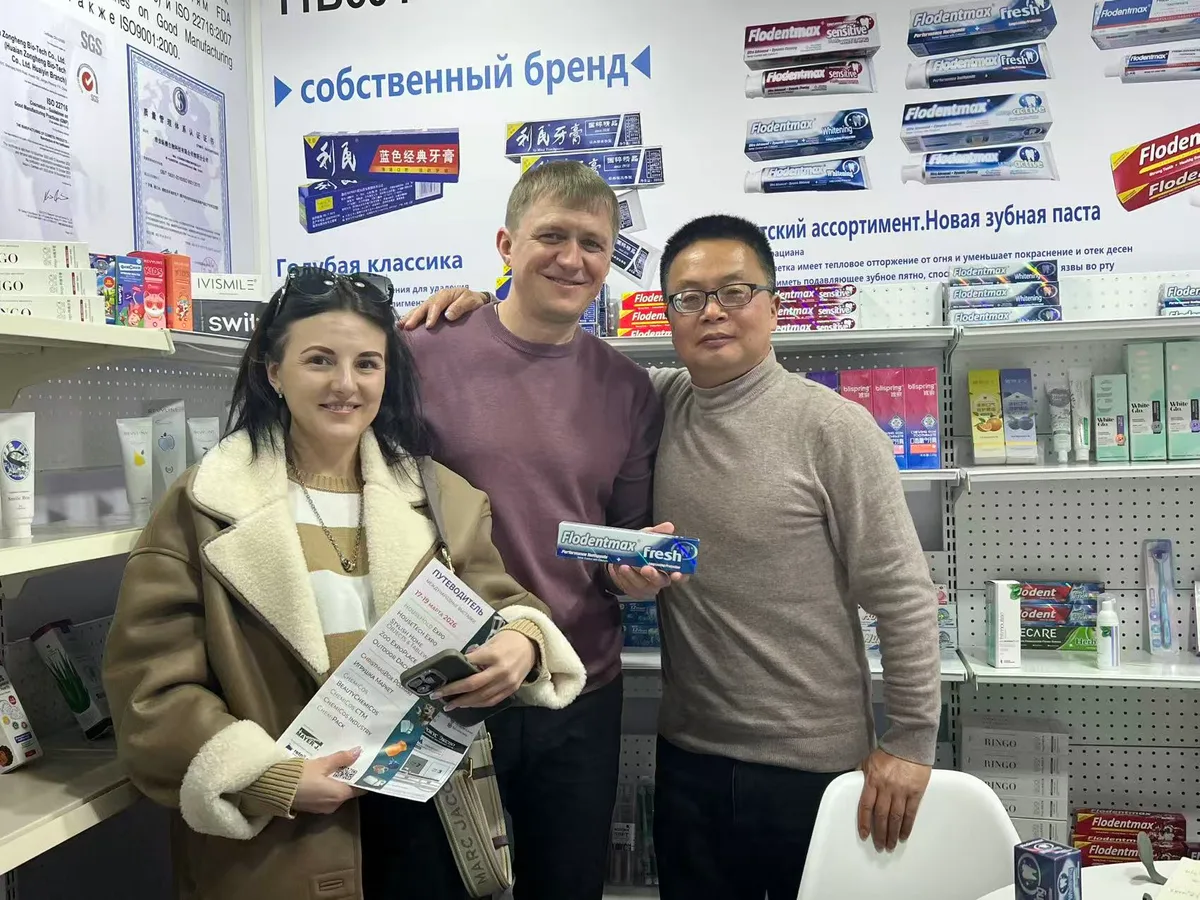
EAC compliance is the gate, and it depends on the formula
This is the part that strands shipments, so it is worth getting right before anything else. Toothpaste sold in Russia and the wider Eurasian Economic Union falls under the technical regulation TR TS 009/2011, which governs the safety of perfumery and cosmetic products. Toothpaste is treated as a cosmetic, and the document you need depends on what is in the tube.
The rule of thumb buyers should carry into 2026 is simple. A standard adult paste usually clears on a Declaration of Conformity (декларация соответствия), which is the lighter and faster route. But a specific list of formulas needs full state registration, the СГР (свидетельство о государственной регистрации), which takes longer and costs more:
- Fluoride above 0.15%: many effective anticavity pastes sit here.
- Children's toothpaste: a large category, and one that always triggers registration.
- Whitening formulas, including the popular V34 colour-corrector type.
- Peroxide-containing products.
So the compliance cost of a product is not a flat fee. It is set by the formula you choose. A buyer who plans to launch a whitening line and a children's range is signing up for two СГР registrations before a single tube ships, while a buyer starting with a standard mint adult paste has a much shorter road. We tell buyers this at the quoting stage rather than after, because the worst version of this story is a container of children's paste discovering its registration requirement at the border. If you are still deciding which SKU to launch first, our guide on starting a private label toothpaste brand walks through that first-SKU decision.
How Russian buyers verify a Chinese factory in 2026
Russian B2B procurement has a habit foreign suppliers often miss. Before a serious buyer signs, they run the supplier's legal entity through public registries using its ИНН or ОГРН number, checking how long the company has traded, its size, and whether it carries debt. That works on a Russian counterparty. It does not work on a factory in China, because there is no ИНН to look up.
The factories that win Russian business solve this by giving buyers other things they can independently check. A verifiable ISO 22716 cosmetic GMP certificate number, cross-checkable against the issuing body. An FDA registration a buyer can confirm in FDA's own database. Real photographs of the production lines rather than catalogue stock images. A clear, specific answer on whether the factory has shipped to Russia before and what EAC documentation it provides. We put four certificates with real numbers in front of buyers (ISO 22716, FDA CFSAN GMP, the Chinese cosmetic production licence, and ISO 9001) precisely so a Russian buyer's customs broker can verify them without taking our word for anything. The principle the whole market now runs on is that being independently checkable beats looking polished. If you want the full list of what to confirm, we wrote a checklist of seven things to verify before signing with an OEM supplier.
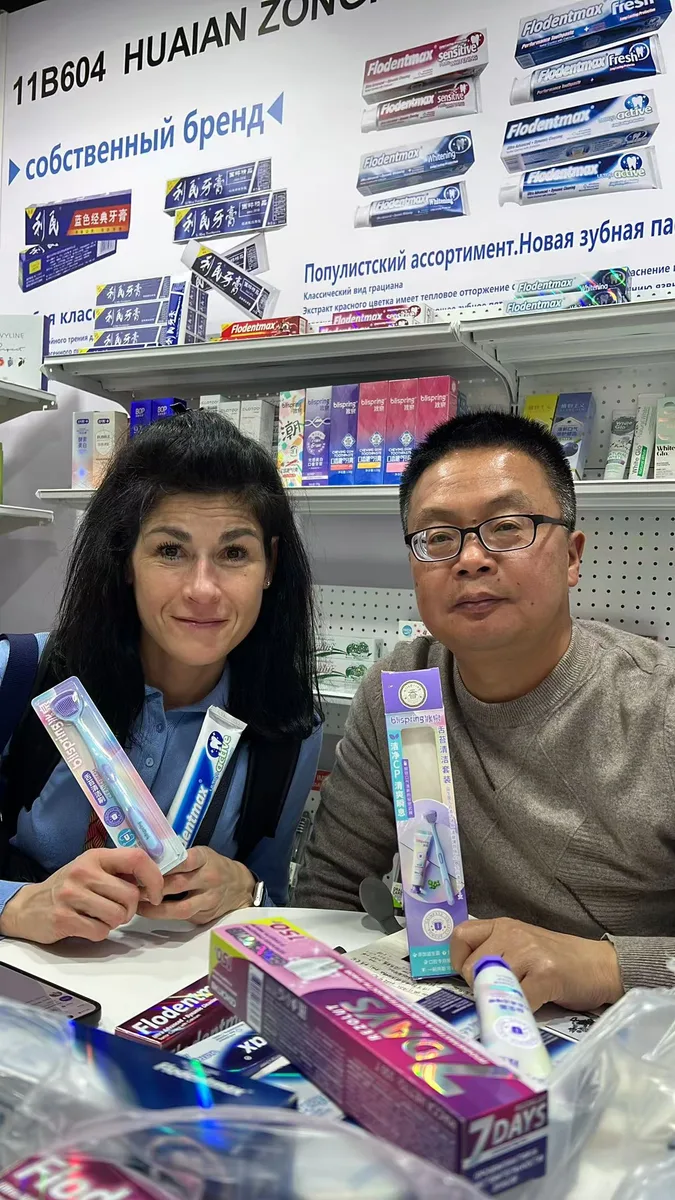
What buyers are asking us to make
The product mix Russian buyers request has a clear shape in 2026, and it tracks what sells on the marketplaces.
Whitening stays the perennial driver. Demand for отбеливающая paste does not fade, and the V34 purple colour-corrector format that took off through social video is still a frequent request. The catch, again, is that whitening triggers СГР registration, so the buyers who do well are the ones who plan that cost in rather than treating it as a surprise.
Natural and fluoride-free is the clear growth line. The натуральная and травяная (natural and herbal) positioning that drove the wider Russian cosmetics market has reached oral care. Fluoride-free, herbal, "no SLS, no parabens" formulas with ingredients like aloe and propolis are an easy story to tell a marketplace shopper, and they sidestep the fluoride registration threshold, which makes them attractive to a first-time importer wary of the heavier compliance route.
Sensitive and remineralising formulas are the premium upgrade. Pastes for sensitive teeth and hydroxyapatite remineralising formulas are where buyers chasing a higher price point are looking, mirroring the same premiumisation happening in oral care worldwide.
Underneath all of it sits price sensitivity. The Russian private label market is cost-aware, and buyers compare quotes hard. The mistake is reading that as a pure price race. After the disruption of recent years, Russian importers are at least as worried about a supply chain breaking, a shipment stuck in customs, or payment not clearing as they are about the unit price. A factory that can show stable delivery, complete EAC documentation and a verifiable track record tends to win over one that is simply cheapest, because the cheapest quote means nothing if the goods never clear.
The contact habits shifted too
One practical note that catches exporters used to other markets. The default "just put a WhatsApp button on it" approach, which works across the Middle East and Southeast Asia, is now a weaker fit for Russia. Through 2025, Telegram overtook WhatsApp as Russia's most-used messenger, and voice and video calling on both foreign apps was restricted inside the country, leaving text as the reliable channel. A new state-backed messenger, Max, grew quickly alongside them.
For an importer, the takeaway is small but real: a Chinese supplier who reaches you on Telegram and answers in text, fast, is reading the Russian market correctly. One who insists on a WhatsApp voice call may not be. It is a minor signal, but minor signals are how buyers read whether a supplier actually understands where they sell.
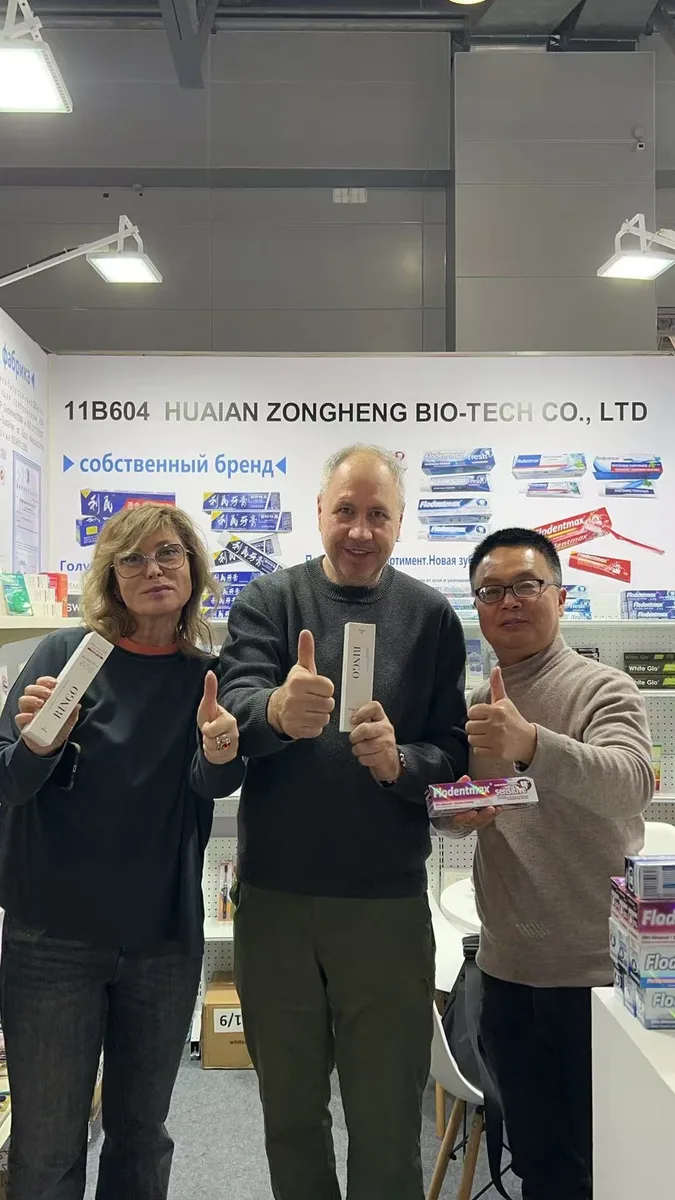
What an importer should do with all this
Pulling it together, the Russian private label toothpaste market in 2026 rewards a buyer who plans compliance into the product choice from day one. Decide early whether your first SKU is a standard adult paste that clears on a Declaration, or a whitening or children's product that needs СГР, because that single choice sets your timeline and a chunk of your budget. Pick a supplier you can independently verify, since you cannot run a Russian-style legal-entity check on a Chinese factory and certificate numbers, real photos and a clear EAC answer have to do that work instead. Match the product to where it sells, which for most new entrants now means a marketplace, with packaging and Russian labelling built for that. And read the small signals, including how a supplier talks to you, as evidence of whether they have done this before.
We ship private label oral care into Russia and the EAEU, and we treat the EAC and EAEU documentation as part of the job rather than an extra. If you are weighing a launch, the most useful next step is a real conversation about your specific products: which of them clear on a Declaration, which need СГР, and what the landed picture looks like at your launch volume. You can see how that fits into a full run on our OEM and export services page, or read the wider buyer's checklist for choosing a manufacturer and the comparison of OEM and ODM to decide how you want to produce. Ask us for a sample and a quote, and bring your compliance questions to the first call rather than the last.