
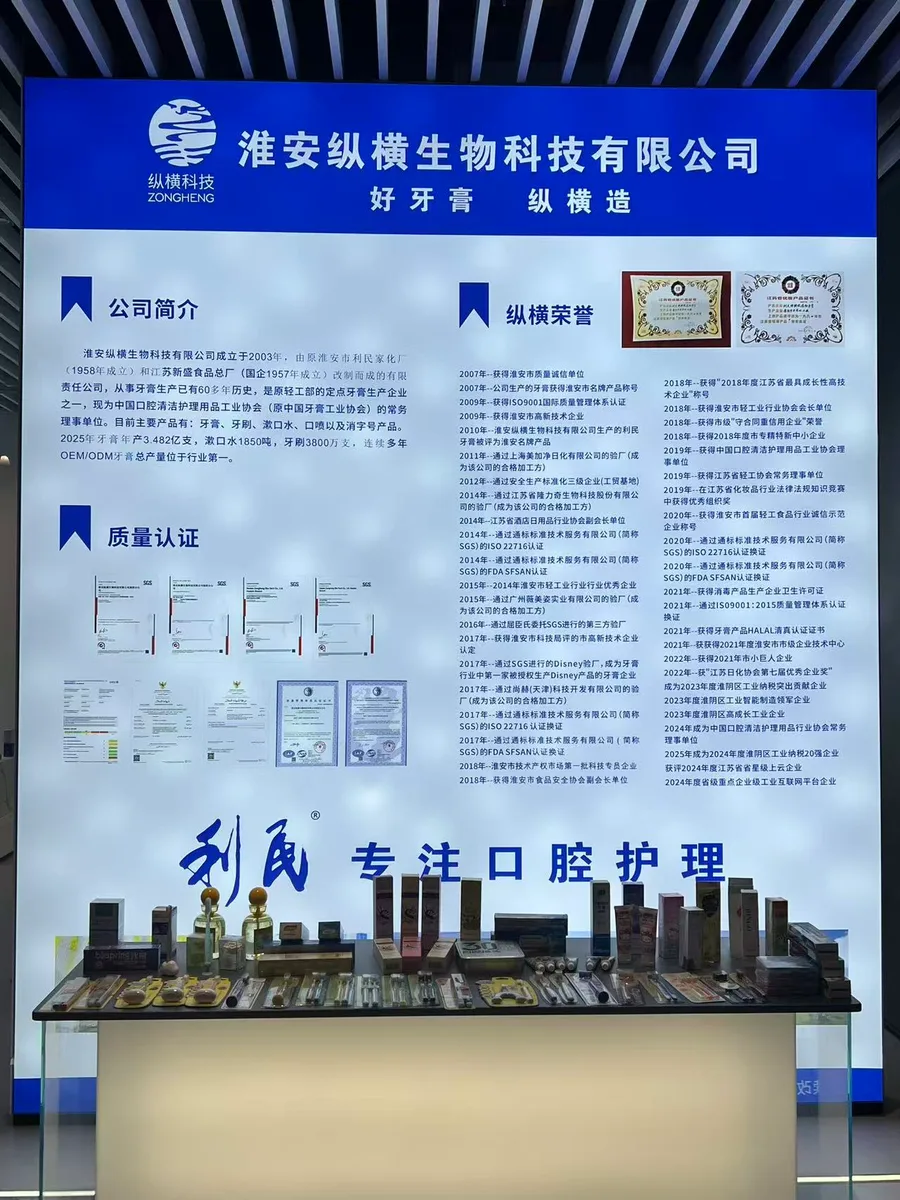
The short version: pick a private label toothpaste manufacturer the way you would hire a partner you cannot easily fire. Check that the factory actually holds cosmetic GMP and the export certificates your destination market requires, confirm the minimum order quantity (MOQ) is something you can sell through, get a paid sample before you commit, and write the lead time and responsibilities into the contract. Most sourcing mistakes in oral care come from skipping one of those four steps because the first quote looked cheap.
I've watched a lot of new brand owners spend three months chasing the lowest unit price, only to lose a year because the supplier could not pass customs or could not hold a stable formula past the first batch. This is the checklist I'd hand a buyer before they sign anything.
1. Does the factory hold the certifications your market actually requires?
Toothpaste is regulated as a cosmetic in most markets, which means the certification questions are not optional. The baseline you want to see is ISO 22716, the cosmetic Good Manufacturing Practice standard. It tells you the factory runs documented production, traceable batches, and controlled hygiene. If a supplier cannot produce an ISO 22716 certificate with a number you can cross-check against the certifying body, treat that as a red flag, not a paperwork delay.
On top of that, the certificate you need depends on where you sell:
- United States: the manufacturer should be registered under FDA drug GMP for fluoride toothpaste (it's an OTC drug there, not just a cosmetic) and able to support OTC monograph compliance and labeling.
- European Union: ISO 22716 plus a Cosmetic Product Safety Report (CPSR) and a Responsible Person inside the EU.
- Russia, Kazakhstan, the wider EAEU: you need EAC conformity. Standard adult toothpaste usually clears with a Declaration of Conformity, but fluoride above 0.15%, children's toothpaste, whitening, and peroxide products require state registration (СГР). That process is slower and more expensive, so it changes your timeline.
At our own factory the four certificates we put in front of buyers are ISO 22716, FDA CFSAN GMP, the Chinese cosmetic production licence, and ISO 9001, each with a real number on the scan. The point isn't the brand of certificate. The point is that you, or your customs broker, can independently verify it. A manufacturer that hides certificate numbers is telling you something.
2. Can you live with the MOQ, and is it honest?
Minimum order quantity is where a lot of first-time buyers get quietly burned. A factory geared for supermarket contracts often won't touch an order below 10,000 to 30,000 units per SKU. That's fine if you're a chain. It's a cash-flow trap if you're launching a brand and still testing which flavor sells.
Ask three things, in this order:
- What is the real MOQ per SKU, not per total order? Some quotes hide a low headline MOQ that only applies if you bundle several products together.
- Does the MOQ change with packaging? A custom tube or carton usually carries its own minimum from the packaging vendor, separate from the paste.
- What does the price look like at your real first-order volume? Not the price at 50,000 units. The price at the 1,000 to 5,000 you'll actually buy.
We set our toothpaste MOQ at 1,000 units per SKU on purpose, because it lets a new brand test two or three flavors in one launch without sinking the whole budget into inventory you can't move. Whatever factory you choose, run the math on your second order, not your first. If the only affordable price is at a volume you can't sell in six months, the cheap quote isn't cheap.
3. Will they send you a real sample, and what does it cost?
Never sign a production contract off a photo and a spec sheet. The texture, foam, mint level, and how the paste behaves after a month on a warm shelf are things you only learn by holding the tube. A serious manufacturer will send a paid sample and, in many cases, credit the sample fee against your first order.
Be suspicious of two extremes. A factory that refuses to sample at all is hiding something. A factory that floods you with "free" generic samples instantly, with no formula conversation, is usually selling you a stock product with your logo on it, which may be exactly what you want or exactly what you don't.
When you get the sample, judge it against your destination market, not your own taste. Whitening that reads "strong" to a buyer in one country reads "harsh" in another. Foam level, abrasiveness, and flavor intensity all shift by region. Ask the factory which markets the formula already ships to. A manufacturer that already exports the same product to your target region has done the hard part of the localization for you.
4. How fast do they answer, and how fast do they ship?
Response speed during the quoting stage is the cheapest forecast you'll ever get of what working with a supplier feels like. If it takes four days to get an answer while they still want your business, imagine the silence after the deposit clears.
Two numbers worth asking for directly:
- Quote and inquiry response rate. Our own on-platform response rate runs around 97.78%, and that's the standard I'd hold any supplier to during evaluation. Slow, partial answers now mean missed shipments later.
- On-time delivery rate. Ask for a real percentage, then ask what counts as "on time" in their definition. A 100% on-time record only means something if the clock starts at order confirmation, not at the moment they happen to have stock.
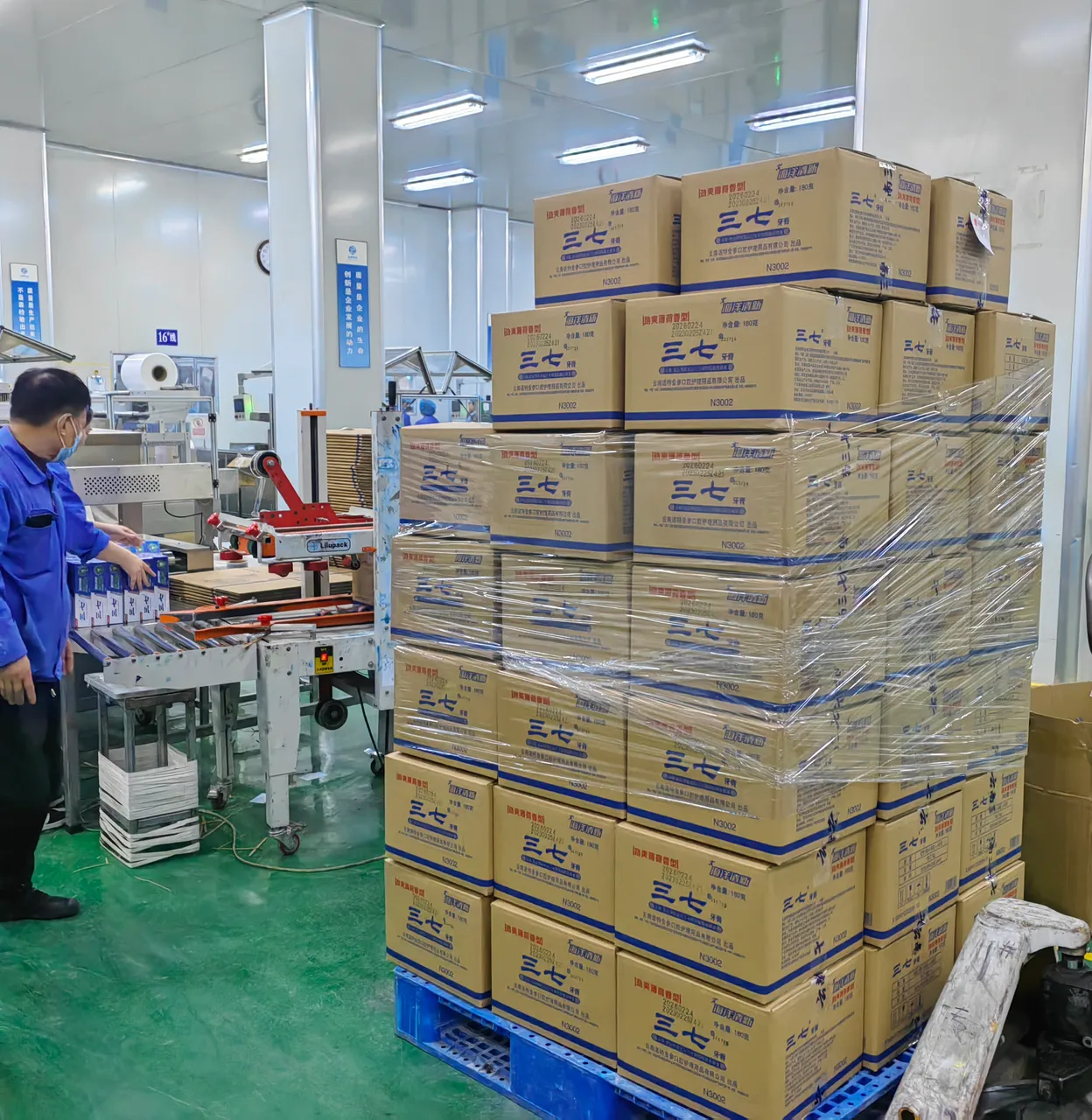
Then map the full timeline before you commit: sampling, formula sign-off, packaging proofs, production, QC, and shipping. For a standard private label run that's typically several weeks once artwork is final. The factories that quote you an impossibly short lead time are the ones that miss it.
5. OEM or ODM: do you need a formula, or do you have one?
This decides which kind of factory you're even shopping for.
ODM (Original Design Manufacturer) means the factory already owns the formula and you put your brand on it. It's faster, cheaper to start, and lower risk, because the product is already proven and certified. Most first-time brands should start here. You pick from a tested catalog: a V34 colour-corrector whitening paste, an aloe and propolis fluoride-free herbal line, a children's formula, and so on.
OEM (Original Equipment Manufacturer) means you bring the formula, or co-develop one, and the factory produces to your spec. You get a unique product and full control, but you pay for development, you wait longer, and you carry the regulatory burden of a new formula.
A capable manufacturer offers both, so you're not forced into the wrong model by the factory's limitations. Start ODM to get to market, move to OEM once you know what sells and want something competitors can't copy off a catalog.
6. Can they handle your paperwork and customs, or do you?
This is the question buyers forget, and it's the one that strands a container at the border. Ask plainly: who prepares the export documents, the compliance labelling in the destination language, the safety data, and the certification filings.
The EAEU case makes this concrete. To sell on Ozon or Wildberries in Russia, your toothpaste needs EAC conformity, and the higher-risk categories need state registration. A manufacturer that says "that's your problem" has just added months and a consultant's fee to your launch. One that says "we provide the conformity documentation and the Russian-language compliance labels" has removed your single biggest risk. We treat EAC and export documentation as part of the job, not an extra, for exactly this reason.
The questions to ask before you sign
Print this and run it down the phone with every shortlisted supplier:
- Can you send your ISO 22716 certificate with a verifiable number?
- What certificate do I need for my market, and do you already hold it or help me get it?
- What is the real MOQ per SKU, and what's my unit price at 1,000 and at 5,000?
- Will you send a paid sample, and is the fee credited to my first order?
- What markets does this formula already export to?
- What is your inquiry response rate and on-time delivery rate?
- Walk me through the full timeline from sample to shipped goods.
- Do you offer both OEM and ODM?
- Who prepares export documents and destination-language compliance labels?
A manufacturer worth signing with answers all nine without flinching. The ones who get vague on certificates, MOQ, or paperwork are showing you the problems you'll inherit. Cheap is easy to quote. The supplier you want is the one who can still ship, certified and on time, on your second and third order.
Want to go deeper on any one of these? We turned the verification side into a longer piece on the things to verify before choosing a toothpaste OEM supplier, with how to check each one yourself. If you have settled on a supplier and want the full launch path, the step-by-step guide to starting a private label toothpaste brand covers first SKU to first shipment. And if your market is Russia, read how the Russian private label toothpaste market and EAC compliance change what you should stock and how you clear it.
If you're working through this list now, we're happy to be one of the suppliers you pressure-test. Ask for a sample and a real quote at your launch volume, and put us up against the checklist above.